Specifying for maintenance, not just handover
A specification that only works on the day of the final inspection is a photograph, not a building. Access, spare parts, coatings, gutters and replaceable assemblies decide whether the house can be cared for after the skip has gone.
By Sophie Lang, Practice editor · 7 min read
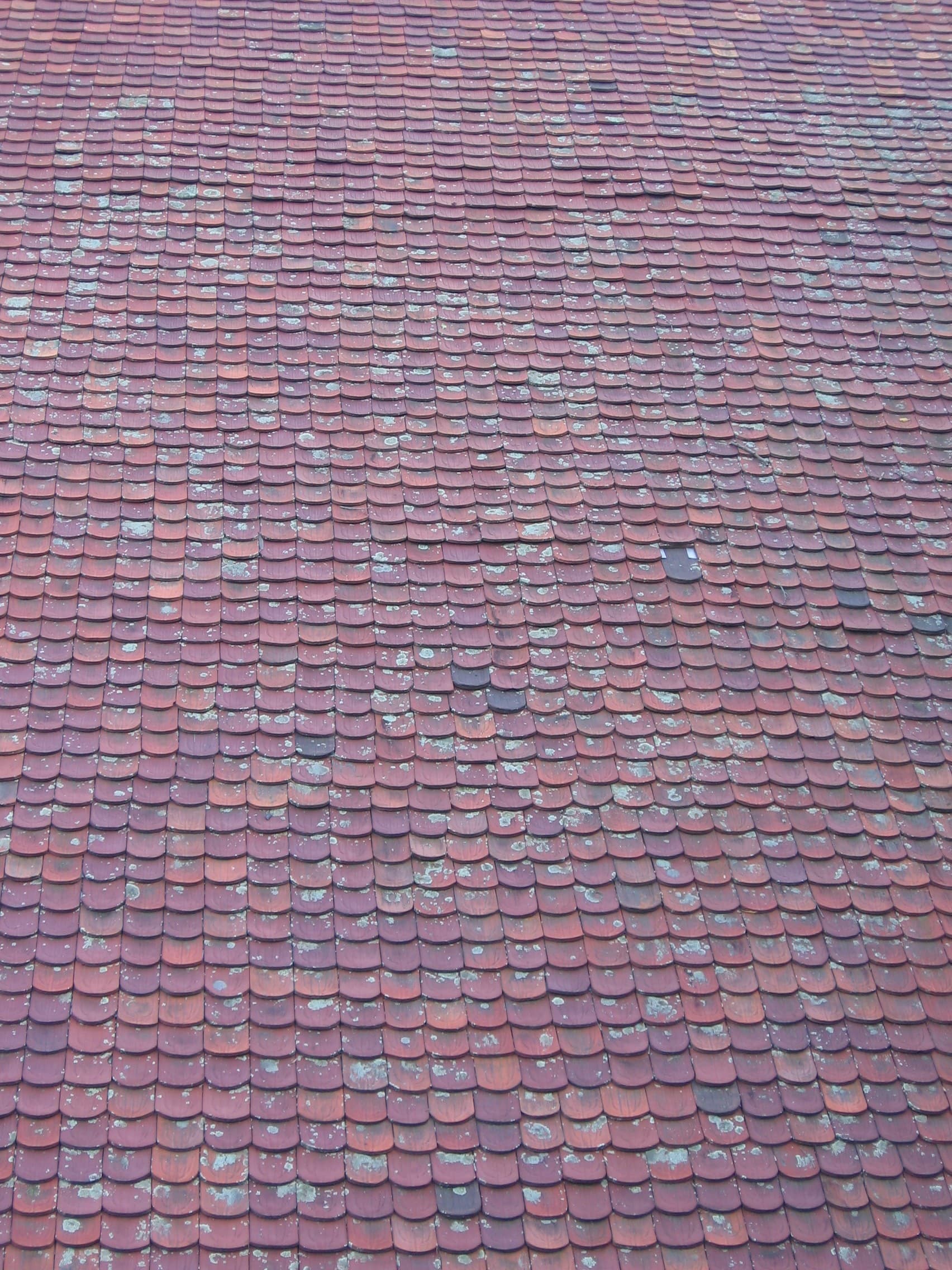
Image: PookieFugglestein. CC0. See the image credits.

Handover is a photograph. The paint is new, the gutters are empty, the roof has not yet seen a season of leaves from the neighbour’s liquidambar. A specification written only for that afternoon will pass an inspection and fail a life. The life is longer. It is a person on a ladder in a northerly, a plumber looking for a valve behind a joinery end panel, a carpenter trying to match a board that was never named as a durability class.
The materials you choose are only half the maintenance story. The other half is whether a stranger can reach them, replace them, and finish them again without inventing a method. Australian hardwoods, specified without romance, are a case of the first half: class, moisture, movement. This is the second half, for any material — access, spare parts, coatings, gutters, and assemblies that can come apart.
Access is a design decision
If a person cannot reach it, it will not be maintained. It will be deferred until it fails, and then it will be maintained as an emergency, at a price that looks like a variation to a life.
Write access as if you were the one who has to do the work in ten years, in weather, without the scaffold that is on site now:
- Roofs that will take a condensed unit or a photovoltaic array need a way up that is not a neighbour’s balcony and a promise. A fixed point, a hatch that opens the right way, an internal stair to a plant deck if the plant is not optional.
- Gutters above a two-storey void need more than a cheerful note that “the painter will have a tower”. They need a length that can be reached from a standard ladder, a break in a wide eave, or a roof that can be walked without destroying the covering.
- Valves, traps, filters and isolation points belong where a hand can find them without emptying a pantry. Behind a service hatch with a catch that still exists in the catalogue. Not behind a fixed fridge panel.
- Windows that must be cleaned on the outside, on an upper floor, need a sash that reverses, a balcony, or an honest acceptance that a contractor will be booked. “Owner to clean” is not a method.
- Subfloor and roof spaces need an opening a person can use, a path that is not an assault course of trusses, and lighting that is not a phone.
Access also means information. A valve that cannot be named is a valve that will be cut. Label the isolation points. Leave a diagram in the meter box that a plumber who has never seen the job can follow. The specification can require that diagram. Handover will not invent it.
The body is part of the brief
Maintenance is done by people of ordinary reach, in ordinary health, on an ordinary Tuesday. A detail that assumes a fearless apprentice and a scissor lift is a detail for the construction period only. If the client is likely to age in the house — and most houses outlast the brief — the access you specify is a form of livable design that does not appear in a marketing schedule. A ground-floor tap to flush the upstairs trap. A roof that can be inspected from a dormer. A filter that unscrews from the front.
Spare parts are a specification, not a leftover
Tiles are batched. Bricks are. Powder-coat colours are. Window sashes are proprietary. A clip that holds a cladding board is a product, not a commodity. When the line is discontinued — and the line will be discontinued — the leftover box is the difference between a repair and a renovation.
Specify, in writing:
- A quantity of spare tiles, bricks or boards to remain on site, labelled by room and batch
- A spare sash or a stated lead time and a named series that the manufacturer still supports
- Touch-up paint, coded, not “white”
- A metre of the gasket, the flashing profile, the proprietary trim
- Where the box lives — not in the skip, not in the painter’s van
This is unglamorous and it is how a cracked floor tile in year six remains a tile, not a reason to rip a bathroom. Clients will try to refuse the spare box because it looks like waste. Waste is the bathroom. The box is insurance you can see.
For hardwood and other natural materials, the spare is also a colour and a movement story. A board kept in the garage will not match a deck that has greyed for six summers unless you accept the difference or you oil the spare as a ritual. Write that honesty into the maintenance schedule. Matching is a process, not a hope.
Coatings fail on a calendar, not at inspection
A coating is a maintenance contract disguised as a finish. Oil on a deck, a penetrating sealer on a sandstone tread, a powder coat on a window, a membrane under a planter — each has a life that is shorter than the building, and a recoat that is only possible if the first coat was specified with the second in mind.
Write the system, not the colour:
- Substrate, primer or pretreatment, film, sheen, and the recoat window
- Whether the coating can be renewed in place or only by replacement of the part
- Compatibility with cleaning — what the owner may not use
- The first maintenance date, even if it is a guess with a season attached
West-facing films, coastal air, a deck under trees, a handrail that is touched every day — these are not the same coating as a south eave. A specification that says “exterior paint” has specified a catalogue. A specification that says “a system with a stated recoat at year seven, accessible from a ladder, colour to be recorded” has specified a life.
Do not hide a high-maintenance coating behind a low-maintenance story. Burnished plaster, limewash, an oiled hardwood bench, a raw steel stair — these can be beautiful. They are also work. If the client will not do the work, specify something that fails more slowly, or write the work into the handover pack as a duty, not as a surprise.
A specification that only works on the day of the final inspection is a photograph, not a building.
Gutters are a maintenance machine
Gutters fail in ways that look like architecture. A hidden box gutter with no overflow is a ceiling stain waiting for a blocked outlet. A valley that cannot be seen from the ground is a valley that will be inspected by a leak. A leaf guard that is incompatible with the profile is a dam. A downpipe that disappears into a wall without an access point is a demolition.
Specify gutters as water, access and replacement:
- Fall, outlet size, and an overflow that discharges where a person will notice it — not into a cavity
- A profile that is still a stock extrusion, or a stated fabrication path for a replacement length
- Leaf management that can be lifted, not a mesh that becomes compost
- Internal gutters only where you can accept a second line of defence and a way to know that the first has failed
- Dissimilar metals named and separated. A copper detail onto a zincalume roof is a chemistry experiment.
The first two years will tell you whether the outlets were generous. The next twenty will tell you whether anyone could reach them. If the eave is a design idea that forbids a ladder, the gutter is no longer a commodity. It is a specialist attendance. Price that attendance in the life, or change the eave.
Replaceable assemblies, not heroic junctions
The most expensive maintenance is the junction that can only be repaired by taking the building apart. A membrane that runs under a fixed kitchen. A window that cannot be removed without destroying the cladding. A tap that is tiled in. A light fitting that is the ceiling. A hot-water unit in a hole that the new unit will not fit.
Prefer assemblies that can come out:
- Wet-area fixtures on access panels, not on hope
- Windows in a reveal that admits a replacement suite of the same size
- Plant on a pad with a path, not in a courtyard that a crane cannot see
- Joinery carcasses that can lose a door and keep a box
- Decks with a board that unscrews, especially over a membrane
Proprietary systems are fine if the system will still exist, or if a generic substitute can sit in the same hole. They are a trap if the clip, the colour and the module are a single living manufacturer. Name a fallback. “Or equivalent” is not a fallback unless you have written the properties the equivalent must meet — cover, movement, finish, the hole in the wall.
Write a short maintenance schedule into the specification and require it to be issued at handover: what, when, how, with what product, and from where. The schedule will be ignored by someone. It will be found by someone else, in year eight, when the coating is chalking and the spare tiles are still in the box. That second person is your actual client. Specify for them. The inspector at handover is only passing through.
Questions from the job
- What is the single most useful maintenance sentence I can put in a specification?
- Name how a person will reach the thing, and what they will replace it with when it fails. "Gutter, accessible from a two-storey ladder on the north, overflow visible from the ground, leaf guard compatible with the profile, replacement length available as a stock extrusion" is a specification. "Coloured gutter" is a handover sentence.
- Do I need to specify spare parts for a house?
- For anything that is batched, discontinued often, or painful to match — tiles, bricks, a window sash, a powder-coat colour, a proprietary clip — yes. A labelled box of leftovers is not romantic. It is how a broken tile in year six does not become a bathroom. Write the quantity to remain on site, and where it will be stored.
Keep reading in Practice

Practice
How to read a builder's tender without being fooled
A tender is not a single number. It is inclusions, exclusions, PC sums, preliminaries and a programme, each of which can hide a different house. Here is the order to read them in, and the questions that make two prices comparable.
Sophie Lang · 14 September 2026
Practice
The superintendent, the contract and who actually decides
AS 4000, AS 4902 and ordinary domestic contracts all name someone who may instruct, and someone who only pays. Confusing those roles is how a nod on site becomes an unpaid variation. Here is who holds the purse, and what a direction actually is.
Sophie Lang · 17 August 2026
Practice
Cost planning that survives first contact with trade prices
An elemental estimate is a structured guess. It dies when the first trade rings unless the rates, the risk allowances and the still-open decisions are written as what they are. Here is how to tell a quantity surveyor's number from a wish.
Sophie Lang · 21 July 2026