How to read a builder's tender without being fooled
A tender is not a single number. It is inclusions, exclusions, PC sums, preliminaries and a programme, each of which can hide a different house. Here is the order to read them in, and the questions that make two prices comparable.
By Sophie Lang, Practice editor · 7 min read

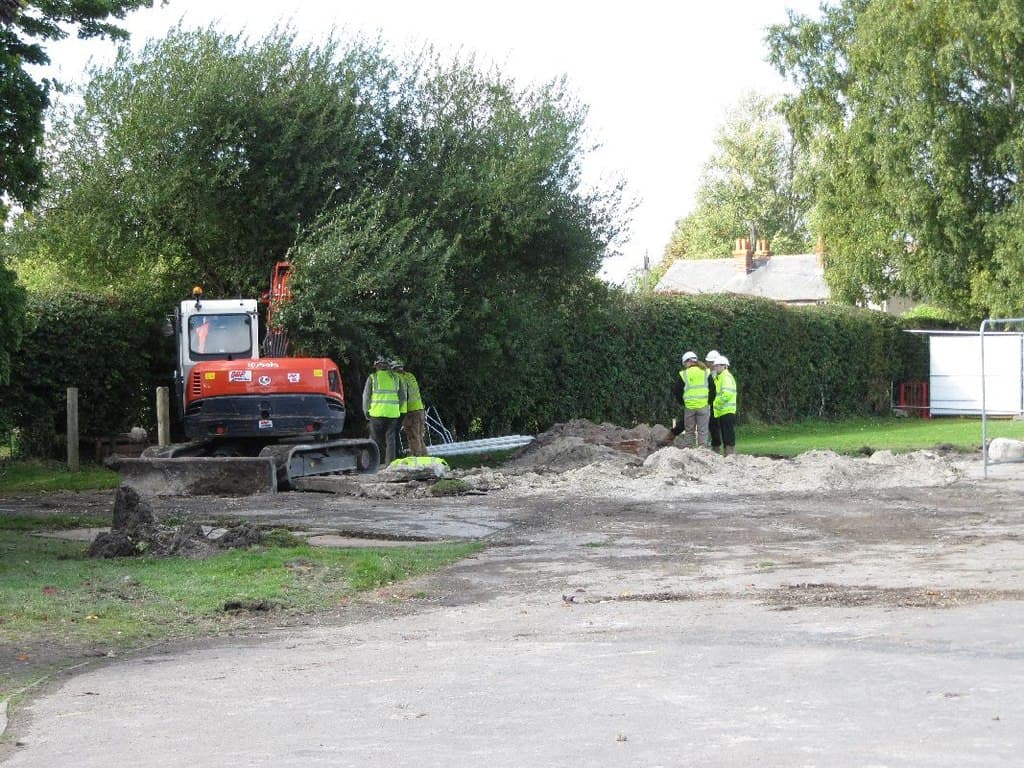
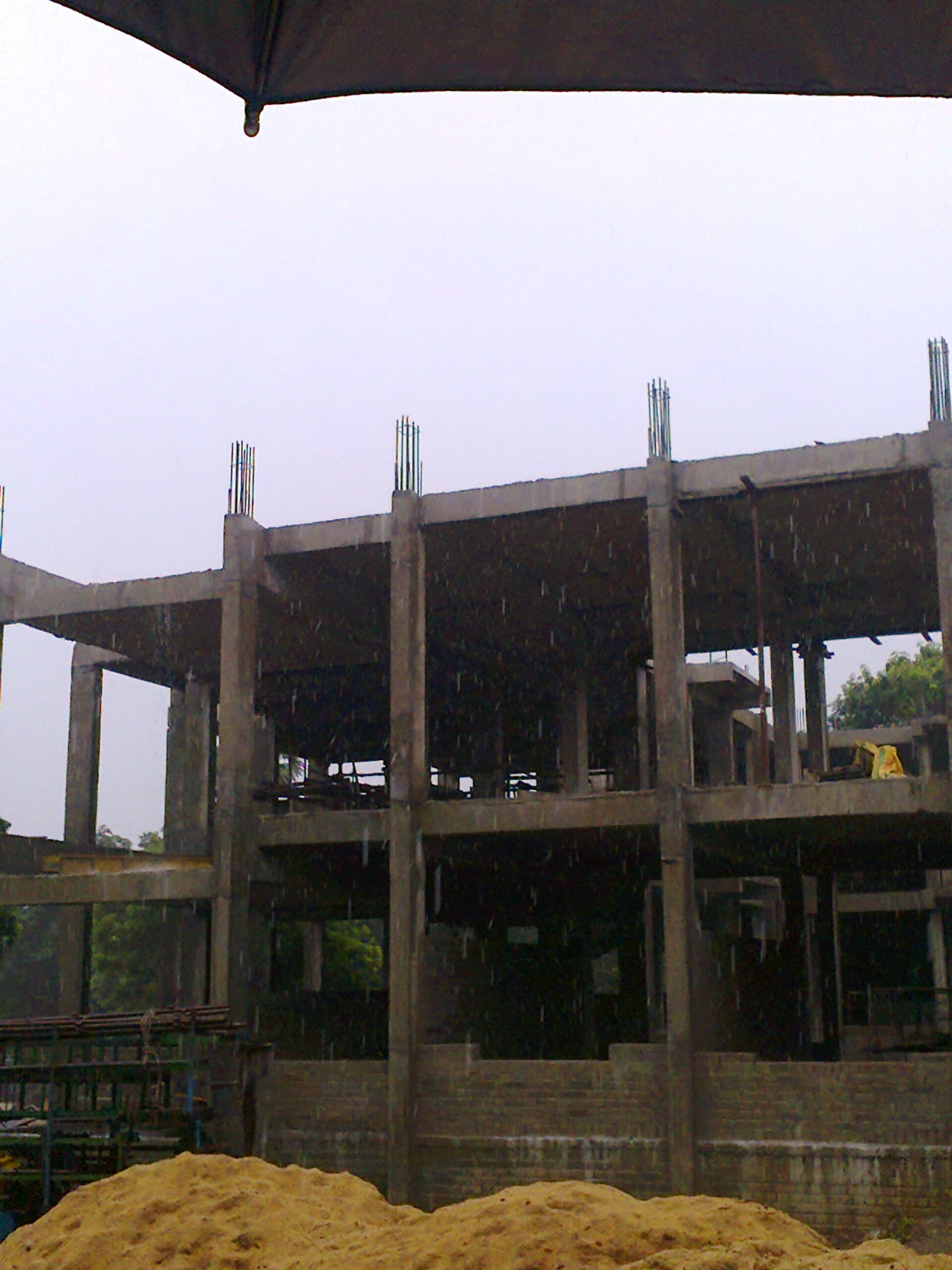
Image: Safwan Mahmud. CC BY-SA 4.0. See the image credits.

A builder’s tender arrives looking like a price. It is not. It is a story about risk, written as columns. One yard has priced the house you thought you described. Another has priced a shorter programme, a thinner scaffold, and a kitchen that will be “selected later” on a sum that would not buy the appliances in the mood board. Both documents will have a total. The totals will be compared at a kitchen table as if they were the same object.
Practice is the unfashionable habit of reading the story before the number. The matching document is a concept brief a builder can actually price. If the brief was vague, the tenders will be incomparable. If the brief was tight, you can still be fooled — by an exclusion in eight-point type, a qualification that rewrites the programme, or a preliminary that assumes the site will behave. This is the reading order.
Start with what is not in the price
Most people start at the total and work backwards. Start at the exclusions. They are the other half of the number.
A competent tender says what the builder is not being asked to do. Window furnishings, loose furniture, a pool, landscaping beyond a stated line, authority fees, work in a neighbour’s land — these are ordinary. Less ordinary, and more dangerous, are exclusions that sound like administration: “rock”, “service authority upgrades”, “protection works”, “temporary power”, “making good to existing”. Those are not extras. They are how a suburban job becomes a job.
Read the exclusions against the brief and the site. If the block falls, and excavation is parked on a thin provisional sum, you do not have a house price. If the brief asked for a working roof and the tender excludes plant and associated structure, the cheapness is a hole. List every exclusion that is still work you need. Add a guess. It will be wrong. It will still be more honest than treating the printed total as complete.
Inclusions deserve the same suspicion, in the opposite direction. “Kitchen included” is not an inclusion. “Kitchen joinery to the ceiling, laminate faces, stone to a stated PC, 900 mm induction, plumbing and electrical attendance, splashback tiled” is an inclusion. The first sentence will be argued later. The second can be priced by a cabinetmaker.
PC sums and provisional sums are not the same kindness
Australian practice still leans on prime cost sums and provisional sums because clients want to choose tiles after the frame is up. That is a legitimate delay. Using a sum to postpone a decision you were afraid to make is a different act.
A prime cost sum (PC) is an allowance for a product the client will select: tapware, appliances, a sanitary suite, sometimes a feature cladding. A provisional sum is an allowance for work that cannot yet be measured: rock, a service relocation, a stair whose geometry is still moving, making good once the lining comes off. Both need three things on the page:
- A dollar figure, and whether it includes GST
- A unit or a scope — how many tap sets, how many cubic metres, which rooms
- A sentence about adjustment: who keeps the saving, who pays the excess, and whether the builder’s margin sits on top
“Kitchen appliances — $8,000 PC” is not a quality. It is a hope that the client will shrink their appetite. “Kitchen appliances, 900 mm induction, matching canopy, dishwasher, integrated fridge-freezer, mid-market domestic grade — $14,000 PC including GST” is a quality. When you compare tenders, line the sums up in a table. If one builder has put the kitchen on a PC and another has specified it, you are not looking at two prices. You are looking at a price and a postponement.
Do not let structure, waterproofing, or the number of bathrooms live on a PC sum. Those are the house. If they are unknown, you are not ready to tender. You are ready for another brief.
A tender is not a price. It is a list of things the builder is willing to be wrong about, and a list of things they refuse to guess.
Preliminaries are a duration wearing a dollar sign
The preliminary column is where jobs live or die, and where clients most enjoy cutting. Scaffold, cranage, sheds, temporary power, insurances, clean, attendance, supervision — none of it photographs well. All of it is how a drawing is allowed to become a site. Why preliminaries eat your budget is the longer account of that factory. For reading a tender, three questions are enough.
How long may the scaffold stand? A line that says “scaffold included” has priced a duration. Ask the weeks. Ask what happens when the glass is late and the hire clock keeps running.
How many crane visits? “Cranage attended” is a story. Frame, steel, joinery, solar, the condenser that will not go up the stair — each can be a separate call-out. Count them against the sequence.
Who is on site, and how often? A preliminary that cannot name a supervisor, or that implies a fortnightly visit on a two-storey infill, is not lean. It is a transfer of management onto you, the architect, and whoever answers the phone at 6.40 am.
Prelim totals cannot be compared as if they were a product. A cheap preliminary often assumes a short programme and a crane that visits once. The low number is only a bargain if the job will in fact be that simple.
The programme is a cost document
Turn to the programme before you turn to the kitchen. Every week has a burn rate: sheds, scaffold, insurance, supervision, the temporary crossover hired from the council. A tender that beats the field by six weeks is not automatically more efficient. It may have omitted wet weather, window lead times, or a protection-works notice.
Read for:
- A start assumption — DA in hand, finance in hand, selections complete, or “twelve weeks from signed contract” with half those things still open
- Critical trades and their lead times, especially windows, steel, and anything imported
- Hold points that the certifier or engineer must attend
- What happens on a wet week, and whether float exists or the builder plans to claim it later
A programme shorter than any comparable job you have watched is not competitive. It is incomplete. Incomplete programmes come back as extensions of time, preliminaries that double, and an argument about who caused the delay — usually more expensive than an honest extra month on the page.
Qualifications rewrite the tender in a polite voice
Qualifications are the sentences that look like courtesy and act like a redraft. “Price based on documents received 4 August.” “Excludes latent conditions.” “Assumes existing sewer is adequate.” “Subject to a site inspection.” “Rise and fall on steel and glass.” Each one is a door.
Some qualifications are professional. A builder who has not walked the site should say so. A price based on a named revision should name it; otherwise the next issue of drawings is a variation by default. Rise and fall is an adult sentence if the index and the base date are written.
Some qualifications refuse the job you issued. “Assumes standard raft slab” without a soil report is a future argument. “Assumes owner will provide temporary power” is how the first week is lost. “Excludes making good to existing floors” on a renovation is how the junction becomes a dispute about taste.
Read every qualification as if it were an exclusion. Many of them are. Then ask the builder to withdraw the ones that simply undo the brief. A tender that can only stand if the brief is ignored is not a tender. It is a counter-offer.
A short method for two or more prices
Do not average them. Do not pick the middle as a personality test. Line them up.
- Same floor area, same wet-area count, same roof form — or write the difference
- Exclusions, side by side, in the same type size
- PC and provisional sums, with qualities, not just dollars
- Preliminaries: duration, scaffold, crane visits, supervision hours
- Programme length and the start assumptions
- Qualifications that change the work or the risk
- Insurances, named
- The sentence that says how variations will be valued
Then look at the total. If one number is much lower, the usual reasons are a missing trade, a thin preliminary, a PC sum that cannot buy the specified quality, or a programme that will not survive the first wet month. Sometimes the low number is a hungry yard and a tight take-off. That exists. It is rarer than a hole.
What a client is being asked to sign
A tender is an offer. The contract will be the offer plus the conditions, the drawings, the specification, and every email that someone later calls “what we agreed”. If you accept a number without accepting the qualifications, you have accepted the qualifications. If you keep issuing drawings, you have accepted a variation machine.
Ask for the tender to be recast on one document: the brief, the drawings at a named revision, a clean list of inclusions and exclusions, and a programme you believe. Builders who will not recast priced a different job. Believe them. The fooling at tender is almost never theatrical. It is a polite column, a missing week, and a sum that looked generous until someone tried to buy a tap. Read those first. The kitchen can wait.
Questions from the job
- Can I compare two builders by the total at the bottom of the page?
- Only after you have lined up the inclusions, exclusions, PC and provisional sums, the programme length, and the qualifications. Two totals that look close can be two different houses. The cheaper number is often the one that left more work out, or assumed a shorter job than the site will allow.
- What is the difference between a PC sum and a provisional sum?
- A prime cost sum is an allowance for an item you will choose later — tapware, appliances, a sanitary suite — where the quality can be written even if the product cannot. A provisional sum is an allowance for work that cannot yet be measured — rock, a service relocation, a stair still moving on the drawing. Both need a number, a unit, and a sentence about what happens when the actual cost differs. Neither is a place to hide the house.
Keep reading in Practice
Practice
The superintendent, the contract and who actually decides
AS 4000, AS 4902 and ordinary domestic contracts all name someone who may instruct, and someone who only pays. Confusing those roles is how a nod on site becomes an unpaid variation. Here is who holds the purse, and what a direction actually is.
Sophie Lang · 17 August 2026
Practice
Cost planning that survives first contact with trade prices
An elemental estimate is a structured guess. It dies when the first trade rings unless the rates, the risk allowances and the still-open decisions are written as what they are. Here is how to tell a quantity surveyor's number from a wish.
Sophie Lang · 21 July 2026
Practice
When to stop designing and start building
Past a point, another revision costs more than it saves — in fees, in holding costs, and in a builder who can no longer trust the drawings. Shop drawings are not design. Here is how to recognise diminishing returns and freeze a house that is ready enough.
Sophie Lang · 23 June 2026