Insurance, defects and the first two years
Handover is not the end of the contract. Domestic building insurance, defects liability and statutory warranties overlap, and they are not the same thing. Here is what to log on the day, and what the first two years are actually for.
By Sophie Lang, Practice editor · 6 min read

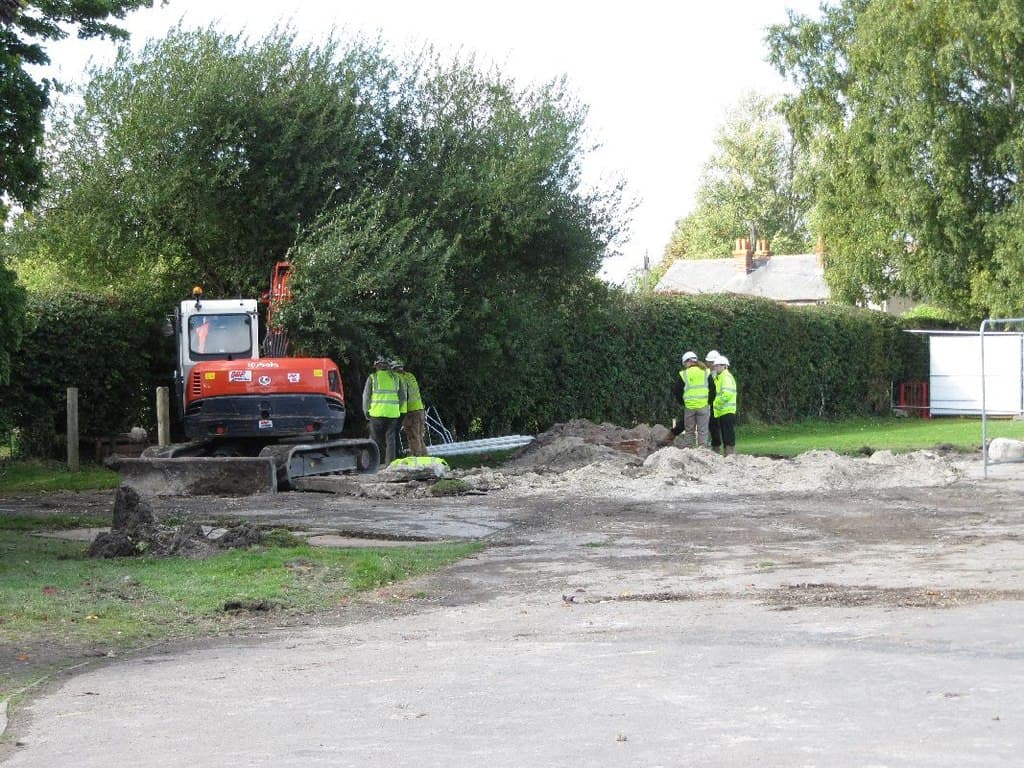
Image: Boyana.kjfg. CC BY 4.0. See the image credits.

Handover is photographed as an ending. Keys, a bottle, a clean benchtop, a family standing where the skip was. The contract is less sentimental. Practical completion — or the domestic equivalent, the day the owner may occupy — is the start of a period in which the building tells the truth about water, movement and workmanship, and in which memory becomes evidence. The first two years are when most of that truth arrives. They are also when people throw the documents away.
Practice after the last invoice is mostly paper and a habit of looking. It sits next to specifying for maintenance, not just handover: the first is what you wrote so the building can be cared for; this is what you keep so a defect can be named, claimed, and fixed by the person who still owes it.
Three nets, not one
Clients speak of “the warranty” as if it were a single object. There are at least three, and they catch different falls.
Domestic building insurance — home building compensation in New South Wales, the Queensland Home Warranty Scheme, domestic building insurance in Victoria, indemnity-style cover in other states and territories — is a statutory safety net above a dollar threshold that differs by jurisdiction. The constant is what the policy is not. It is not a general defects policy for a living, solvent builder. It is cover, within limits and exclusions, if the builder dies, disappears or becomes insolvent, for incomplete work and for certain defects. The certificate should exist before work starts, not as a favour at handover. If nobody can produce it, you do not have a net. You have a story about a net.
Defects liability is contractual. Under the Australian standard forms it is commonly twelve months from practical completion. Domestic forms vary — some shorter, some a year — and the contract you signed is the one that counts. During the period the builder must return and rectify defects you notify. Security or retention, if any, is often timed to this period. When it ends, the contractual duty to come back on a defects list ends with it. The building does not become perfect at midnight. The list simply closes.
Statutory warranties are implied by the home-building statutes. They are longer than most defects-liability periods. In New South Wales and Victoria the familiar split is six years for major or structural matters and two years for others, with local definitions that a tribunal will parse more finely than this sentence. Other states have their own clocks. These warranties survive the defects period. They are how a structural crack in year four is still a builder’s problem, and how a sticking door in year three may not be. They are not a reason to be vague in year one. Tribunals prefer a record.
Manufacturer warranties — windows, paints, membranes, appliances, a roof covering — are a fourth net with their own conditions. Many die if the product was installed by the wrong person, cleaned with the wrong chemical, or never registered. Collect them at handover. Do not assume the builder’s defects period is the same as the powder-coater’s.
Handover is not the end of the contract. It is the start of the period in which memory becomes evidence.
What the insurance will not do for you
The most expensive misunderstanding in the first two years is waiting. A stain appears on a ceiling. The builder is slow. Someone says “we have insurance”. The policy, if it is the statutory domestic kind, is usually waiting for a different disaster: a builder who cannot be found or cannot pay. A slow builder is a contract-administration problem. Ring them. Write. Use the defects clause. Use the statutory warranty if you must. Do not wait for an insolvency that has not happened.
The second misunderstanding is thinking the policy is a maintenance contract. Movement in a timber floor, a door that needs a plane after the first summer, a paint film that was always going to chalk on a west wall — some of this is defect, some is the building living. Insurance assessors are not generous about the difference. Neither are builders, if the handover record is “it looked fine”.
The third is coverage of the existing house on a renovation. Statutory domestic cover is about the building work. The old roof you did not touch, the neighbour’s fence, the contents, the living-in family — those are other policies, if they exist. A house policy can be unenthusiastic about missing walls. Ask, before you open the house, whether the client’s insurer knows.
Defects liability is a list, not a feeling
A defect is work that does not comply with the contract, the drawings, the standards the contract imported, or the statutory warranties. It is not a change of mind about the tile. It is not a preference for a quieter fan. It is not, usually, the hairline that a plasterer will tell you is lighting. Some of those last items become defects if they fail a standard or a performance that was specified. Many do not.
Run the period like a small contract:
- One list, numbered, dated, with a photograph
- One person to issue it — owner, architect, superintendent
- A reasonable time to attend, written
- A note of what was done, and what was deferred to a season
- No new work smuggled onto the list as if it were a defect
Seasonal defects deserve patience and a calendar. A crack that appears after the first long dry, a window that weeps in a southerly, a sliding door that binds when the slab has moved with a Class H site — look once at handover, again after a summer, again after a winter. The first two years exist because Australian houses move. A list closed in the week of the clean will miss the year.
Access is part of the duty. A builder who cannot get in cannot rectify. A client who has installed a new kitchen over a defective floor has complicated their own claim. Keep the appointments. Keep the emails. Charm is not a record.
What to log on the day
Handover is the last moment the whole job is visible and nobody has lived in it. Use it.
Walk every room and every elevation with a camera. Date-stamp. Photograph ceilings, junctions, window heads, the rear of the island, the top of the wall cabinet, the overflow, the ground against the slab, the neighbour’s side of the fence if you have been near it. You are not collecting art. You are collecting a dry building, so that a later wet mark has a before.
Take a written list of outstanding items — the punch list, the defects list, the “we’ll come back” list — and have the builder sign that they have seen it. Incomplete work is not a defect until someone pretends it is finished. Keep those categories apart.
Collect the dull kit that a maintenance specification should already have forced into existence:
- Occupancy or completion certificates, and the essential-safety or maintenance schedule if the state requires one
- Waterproofing certificates, termite management certificates, glazing and balustrade certificates, electrical and plumbing compliance
- As-built drawings, or a red-pen mark-up if that is all there is
- Paint codes, tile batch numbers, flooring species and finish, the window suite name
- Appliance model and serial numbers, with registration left to do
- Keys, codes, the irrigation controller, the garage remote, the location of isolation valves and the stormwater legal point of discharge
- The insurance certificate, the contract, the variation register, the warranties
Put it in one box or one digital folder named with the address and the date. The future carpenter will not hunt through a group chat.
The first wet season is an inspection
Diary a walk after the first serious rain, the first heat, the first cold snap. Look at the ceilings under wet-area edges, the window heads on the weather side, the base of the cavity if you can see it, the overflow, the ground where fill was placed, the deck where two metals meet. Look again at anything that was a fight during the job. Fights remember where to leak.
If something fails, write the date, the weather, and what you did — bowl under the drip, photograph, email that day. A defect that sits in a conversation for six months becomes a story about when it started. Stories are how two-year warranties expire in plain sight.
The first two years will not make the house new forever. They will decide whether the people who still owe the house — builder, insurer, manufacturer — can be shown a fact. Facts are photographs, lists, certificates and dates. Everything else is a feeling about a benchtop on a good afternoon. Keep the facts. Then live in the house. The point of all this paper is that you can.
Questions from the job
- Does domestic building insurance cover ordinary defects while the builder is still trading?
- Generally no. The state schemes are a safety net if the builder dies, disappears or becomes insolvent — incomplete work, and certain defects, subject to the policy. A living builder with a phone number is a defects-liability and warranty problem, not an insurance claim. Do not wait for a policy to do the work of a written list.
- What should I record at handover if I want a defect to be taken seriously later?
- Date-stamped photographs of every room and elevation, a written list of outstanding items, serial numbers and paint codes, the certificates you were given, and the names of who was there. Memory is not a record. A leak that cannot be shown to have started after occupation will become an argument about whether anyone ever saw the junction dry.
Keep reading in Practice

Practice
How to read a builder's tender without being fooled
A tender is not a single number. It is inclusions, exclusions, PC sums, preliminaries and a programme, each of which can hide a different house. Here is the order to read them in, and the questions that make two prices comparable.
Sophie Lang · 14 September 2026
Practice
The superintendent, the contract and who actually decides
AS 4000, AS 4902 and ordinary domestic contracts all name someone who may instruct, and someone who only pays. Confusing those roles is how a nod on site becomes an unpaid variation. Here is who holds the purse, and what a direction actually is.
Sophie Lang · 17 August 2026
Practice
Cost planning that survives first contact with trade prices
An elemental estimate is a structured guess. It dies when the first trade rings unless the rates, the risk allowances and the still-open decisions are written as what they are. Here is how to tell a quantity surveyor's number from a wish.
Sophie Lang · 21 July 2026